Rhinitis

At Ebian Korean Medicine Clinic, rhinitis is cared for with acupuncture, pharmacopuncture, and Korean herbal medicine.

What is rhinitis?

Rhinitis is a respiratory condition in which

the nasal airway, which connects to the lungs, becomes inflamed.

When inflammation of the nasal lining narrows the nasal cavity and sinuses, you cannot breathe through your nose and end up breathing through your open mouth.

Mouth breathing reduces the amount of oxygen reaching the brain compared with nose breathing. Your head may feel heavy and your concentration may drop.

Because you cannot sleep deeply, you may experience chronic fatigue and lethargy.


It can also lead to headaches, dizziness, frequent nosebleeds, dry eyes, snoring, sleep apnea, and hormonal and metabolic problems related to reduced pituitary function,

lowering quality of life and affecting overall health, which can lead to serious conditions.

Rhinitis

At Ebian Korean Medicine Clinic, rhinitis is cared for with acupuncture, pharmacopuncture, and Korean herbal medicine.


Rhinitis is a respiratory condition in which the nasal airway, which connects to the lungs, becomes inflamed.

When inflammation of the nasal lining narrows the nasal cavity and sinuses, you cannot breathe through your nose and end up breathing through your open mouth.

Mouth breathing reduces the amount of oxygen reaching the brain compared with nose breathing. Your head may feel heavy and your concentration may drop.

Because you cannot sleep deeply, you may experience chronic fatigue and lethargy.


It can also lead to headaches, dizziness, frequent nosebleeds, dry eyes, snoring, sleep apnea, and hormonal and metabolic problems related to reduced pituitary function,

lowering quality of life and affecting overall health, which can lead to serious conditions.

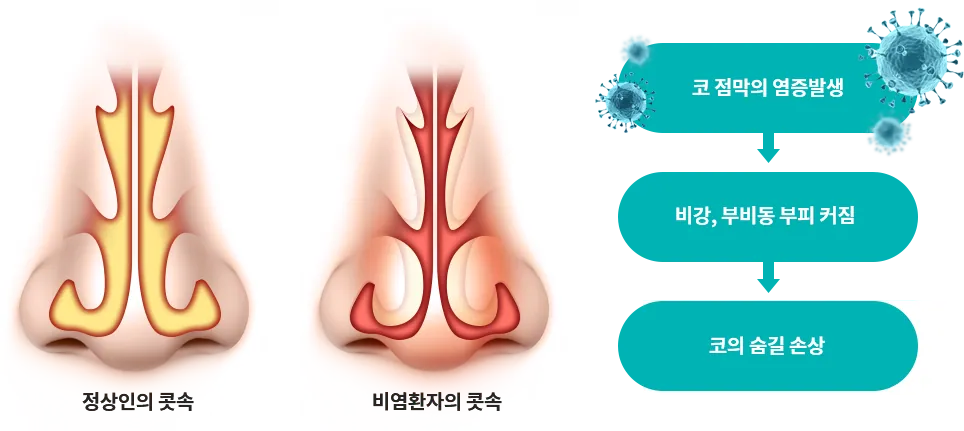
  • Inside a healthy nose
  • Inside a rhinitis patient's nose
  • Inflammation occurs in the nasal mucosa
  • Swelling and expansion of the nasal cavity and sinuses
  • Damage to the nasal airway
Rhinitis Symptoms

The typical symptoms of rhinitis are a runny nose, nasal congestion, and sneezing. Because the symptoms appear in the nose, it seems natural to treat only the nose.

So people take medicine to stop the symptoms, but the effect often does not last and the symptoms come back.

Rhinitis often returns when the season or environment changes, even after the symptoms seem to be gone, so many people give up on treatment and assume it is a lifelong condition.


Rhinitis does not stop at the nose; it affects the entire respiratory system, because the nose is connected to the lungs through the nasal cavity, pharynx, and larynx.

When rhinitis worsens, it can progress to sinusitis, pharyngitis, postnasal drip, snoring, and sleep apnea. These conditions have different symptoms but share the same cause:

they arise when the nasal airway is damaged

and the structure for breathing through the nose breaks down.

Rhinitis recurs often and can feel hard to treat. Ebian Korean Medicine Clinic looks at the causes and provides Korean Medicine care suited to your condition.

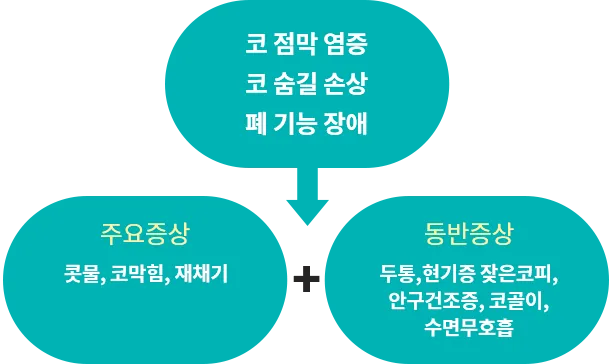
  • Inflammation of nasal mucosa
  • Damage to nasal airway
  • Impaired lung function

Main Symptoms

  • Runny nose, nasal congestion, sneezing

Accompanying Symptoms

  • Headache, dizziness, frequent nosebleeds, dry eyes, snoring, sleep apnea

Inside the nose of a healthy person
Inside the nose of a rhinitis patient

  • Inflammation occurs in the nasal mucosa
  • Enlargement of the volume in the nasal cavity and sinuses
  • Damage to the nasal airway

Mucosal tissue

The nasal airway and its lining: immunity in the nasal lining is central to rhinitis care

The nasal airway is covered with a mucous lining.

When lung function declines and the immune function that deals with harmful substances inhaled from outside weakens, the nasal lining becomes inflamed and swells, narrowing the airway.

Inflammation of the nasal lining causes a runny nose, nasal congestion, sneezing, and sinusitis.

Treating chronic rhinitis and sinusitis
means helping the inflamed mucosa recover.
The focus of rhinitis care

Rather than simply stopping a runny nose, congestion, and sneezing, rhinitis care should look at the structure of the nose and aim to restore your ability to breathe through it.

The nose is connected to the lungs. The lungs support respiration throughout the body and also play a role in protecting it.

This is also why, when lung function weakens, white blood cells become less able to fight off harmful substances, and immune-related conditions can develop.


In this view, rhinitis is a condition that arises when lung function weakens.

When lung function is weak, circulation and recovery in the lungs decline, and the function of the nose, which is connected to the lungs, declines as well.

When lung function declines, damage to the nasal lining is not repaired, resulting in inflammation and rhinitis symptoms.

For this reason, rhinitis care aims to support lung function and restore nasal breathing.

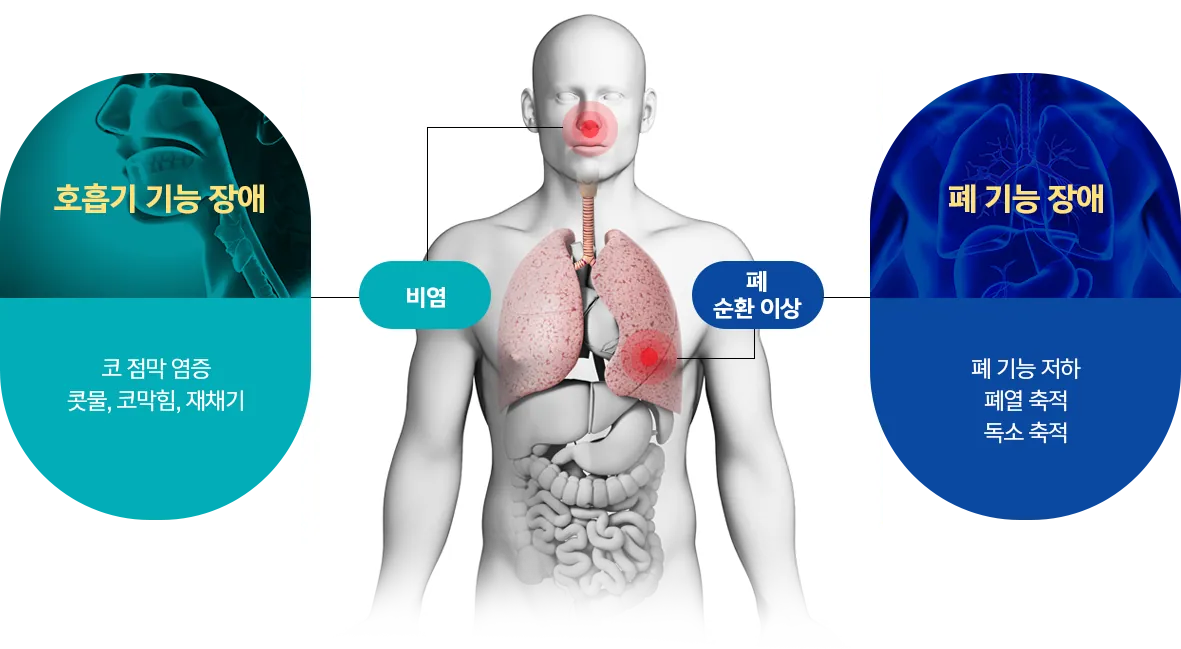
Respiratory Dysfunction

Rhinitis

  • Nasal mucosa inflammation
  • Runny nose, nasal congestion, sneezing

Lung Dysfunction

Impaired lung circulation

  • Decreased lung function
  • Accumulation of lung heat
  • Accumulation of toxins

We look at the degree of inflammation in the nasal lining when providing care, and follow how your breathing is maintained over time.

Even if environmental changes cause inflammation of the nasal lining, the lungs' ability to recover from that inflammation should be strengthened.

Ebian Korean Medicine Clinic's nasal and airway care

Care designed to restore nasal breathing and support lung function

Endoscope-guided care of the deep nasal lining

Hwalbi-tang (an herbal decoction for lung function)

Nasal suction

Pharmacopuncture for the nasal lining

Nasal bloodletting acupuncture

Non-surgical
Endoscopic Nasal Cavity Expansion

Care for the nasal lining begins deep inside the nose.

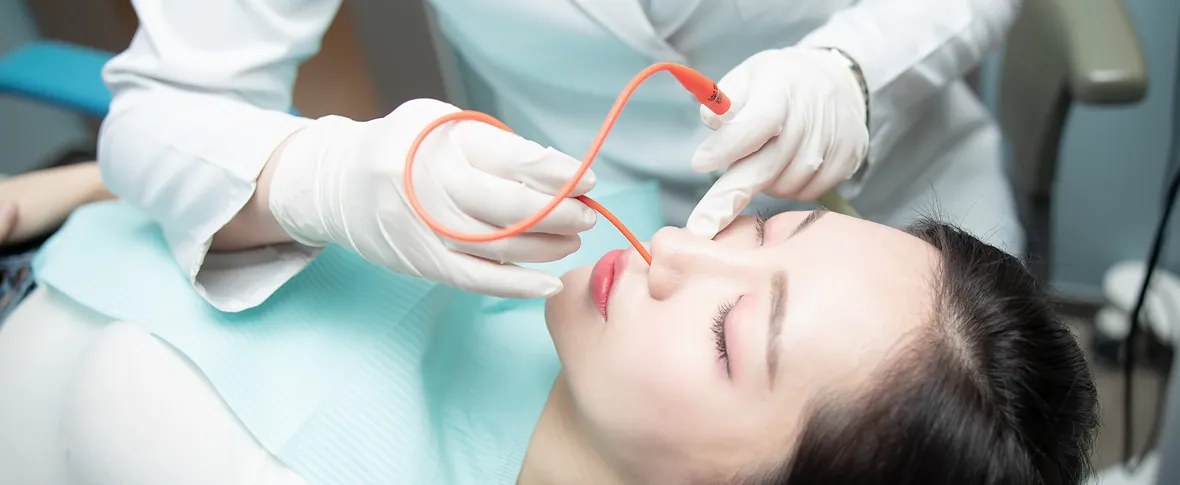
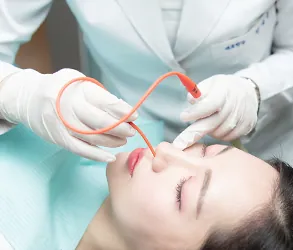
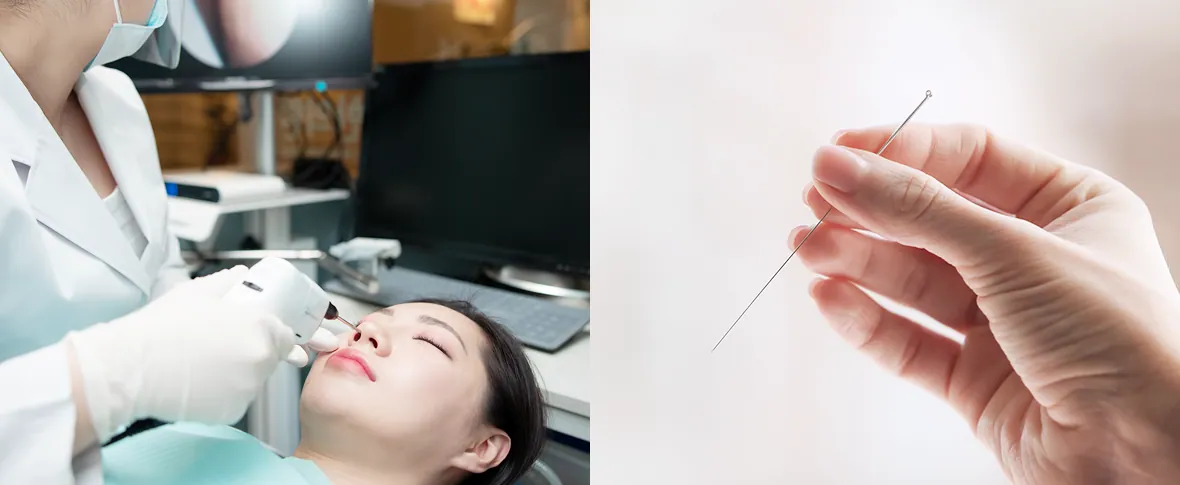
While viewing the nasal cavity through an endoscope, we use acupuncture needles to stimulate deep areas of the nasal lining and release small amounts of blood.

We apply acupuncture and pharmacopuncture stimulation to the nasal lining; the method may vary depending on the condition of the lining.

This aims to improve blood circulation in the lining and help secretions drain more easily.

We look at the condition of the lining and the degree of inflammation when providing care.

  • Nasal mucosa inflammation, swelling — Acupuncture bloodletting
  • Secretion of immune substances from the mucosa
  • Inflammation treatment — Recovery of nasal mucosa
Real-time endoscope-guided care

Korean Medicine with modern tools: precise targeting

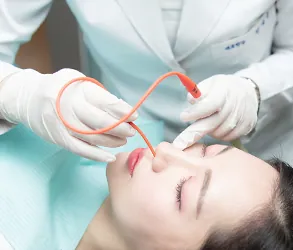
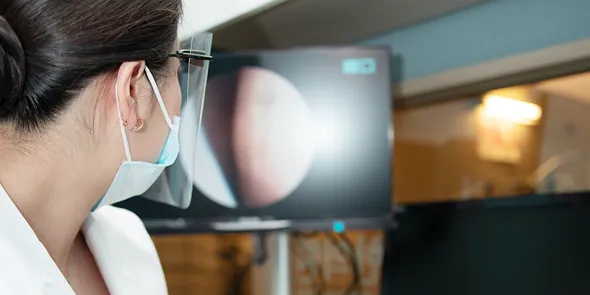
Nasal bloodletting performed while checking the lining through an endoscope

Nasal bloodletting acupuncture

Non-surgical Endoscopic Nasal Cavity Expansion

Care for the nasal lining begins deep inside the nose.

While viewing the nasal cavity through an endoscope, we use acupuncture needles to stimulate deep areas of the nasal lining and release small amounts of blood.

We apply acupuncture and pharmacopuncture stimulation to the nasal lining; the method may vary depending on the condition of the lining.

This aims to improve blood circulation in the lining and help secretions drain more easily.

We look at the condition of the lining and the degree of inflammation when providing care.

  • Nasal mucosa inflammation, swelling — Acupuncture bloodletting
  • Secretion of immune substances from the mucosa
  • Inflammation treatment — Recovery of nasal mucosa

A scientific approach to Korean medicine

We explain each step of care.

Ebian Korean Medicine Clinic provides care while checking the condition

of the nasal lining through an endoscope.

We check the inside of the nose through an endoscope, observing the nasal lining in real time and targeting inflamed areas.

We look carefully at the areas that need care.

Five-area airway approach

An anatomical approach: care for five areas—the inferior, middle, and superior turbinates and the pharyngeal and laryngeal linings

Superior turbinate

Middle turbinate

Pharyngeal mucosa

Inferior turbinate

Laryngeal mucosa

Airway


We divide the lining of the nasal airway into five areas—the inferior, middle, and superior turbinates and the pharyngeal and laryngeal linings—and care for them as a whole.

Rather than stimulating only the inferior turbinate at the entrance of the nose, we check your condition through an endoscope

and work from the inferior turbinate deep into the airway.

This allows care to reach inflamed areas that are hard to access, and we treat the lining from the entrance of the nose deep inside with pharmacopuncture according to its condition.

Changing how you breathe through your nose

The nose is the first gateway to the lungs. By supporting lung function,

we work toward breathing through the nose.

Strengthening lung function

Building nasal breathing
The nose is connected to the lungs through the nasal cavity, pharynx, and larynx.

When rhinitis and sinusitis worsen, they can progress to pharyngitis, postnasal drip, snoring, and sleep apnea. These conditions have different symptoms but share the same cause.

When lung function is weak, circulation and recovery in the lungs decline, and the function of the nose, which is connected to the lungs, declines as well.

Ebian Korean Medicine Clinic first checks your rhinitis and sinusitis symptoms and condition, and provides care while looking at how you breathe through your nose.


The nose is the first gateway to the lungs. By supporting lung function, we work toward breathing through the nose.

Strengthening lung function

Building nasal breathing
The nose is connected to the lungs through the nasal cavity, pharynx, and larynx.

When rhinitis and sinusitis worsen, they can progress to pharyngitis, postnasal drip, snoring, and sleep apnea. These conditions have different symptoms but share the same cause.

When lung function is weak, circulation and recovery in the lungs decline, and the function of the nose, which is connected to the lungs, declines as well.

Ebian Korean Medicine Clinic first checks your rhinitis and sinusitis symptoms and condition, and provides care while looking at how you breathe through your nose.


Endoscope-guided care of the deep nasal lining

Care that aims to reduce inflammation of the nasal lining,

restore it to a healthier state, and open a narrowed airway.

With repeated care to open the airway, the nasal lining can regain its elasticity and nose breathing can gradually return to normal.

The goal is a healthy breathing pattern that lets you breathe in and out through your nose during the day and during sleep.


Hwalbi-tang (an herbal decoction for lung function)

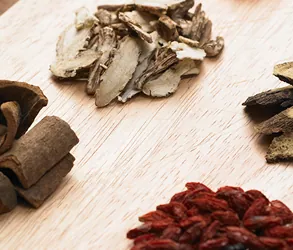
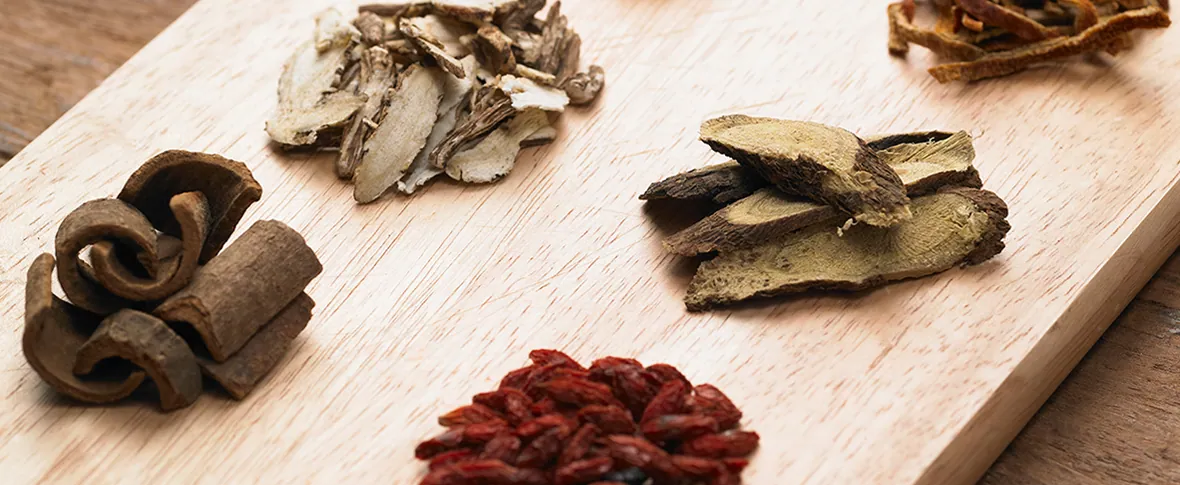
Hwalbi-tang is a Korean herbal decoction prescribed to support lung function.

It aims to help oxygen taken in through the lungs reach every cell in the body evenly so that energy can be produced.

Hwalbi-tang is an herbal medicine prescribed after looking at lung function, and it is used according to the condition of the nasal airway.

With attention to the respiratory lining, lung circulation, body temperature regulation, and defense against harmful substances,

it is prescribed individually according to each patient's symptoms.


Nasal suction

Inflammatory secretions and pus that have collected inside the nose are removed directly to support care.

This is more than simply removing pus: it aims to clear pus and debris from deep within

the maxillary, frontal, ethmoid, and sphenoid sinuses.


Pharmacopuncture for the nasal lining

Pharmacopuncture for the nasal lining combines

the characteristics of herbal medicine and acupuncture.

A highly purified extract from decocted herbs is injected directly into the inflamed area to support recovery of the lining.

Direct stimulation of the lining cells aims to support recovery of damaged lining.


Treatment Components

1:1 personalized exam

Nasal endoscopy
Thermal imaging
Pulse diagnosis

Hwalbi-tang (herbal medicine)

Hwalbi-tang prescription

Nasal suction

Draining nasal pus

Pharmacopuncture for the nasal lining

Supporting damaged mucosa

Treatment Components

1:1 personalized exam

Nasal endoscopy
Thermal imaging
Pulse diagnosis

Hwalbi-tang (herbal medicine)

Hwalbi-tang prescription

Nasal suction

Draining nasal pus

Pharmacopuncture for the nasal lining

Supporting damaged mucosa

[ For patients traveling from other regions ]

Visit information for long-distance patients

Weekday evening hours, Sunday clinic

Ebian Korean Medicine Clinic

Weekday
evening hours

Sunday priority
booking for
long-distance patients

Phone consultation
in advance to
shorten waiting

※ When booking, please mention that you are a long-distance patient.

How our nasal and airway care began

"At Ebian Korean Medicine Clinic, we start by understanding your condition.
For chronic rhinitis and sinusitis,
we will plan Korean Medicine care suited to your symptoms."

We tailor care to each patient's condition.


Through ongoing research into how the nose and lungs are connected as one structure, Ebian Korean Medicine Clinic found that caring for rhinitis and sinusitis

means supporting lung function

and building a breathing pattern that allows you to breathe through your nose.

After much effort, we developed Ebian Korean Medicine Clinic's nasal and airway care,

which aims to restore the nasal airway and support lung function.


At Ebian Korean Medicine Clinic, we look at your condition and plan your care.

For persistent chronic rhinitis and sinusitis,

we look at the causes and provide Korean Medicine care suited to your symptoms.

We will guide you through care for your nasal symptoms.

Hours (Korea Standard Time, KST)
Weekdays09:00~21:00
Sat · Sun · Public Holidays09:00~16:00
Lunch Break12:30~14:00
Weekend & Holiday Lunch Break12:00~13:00

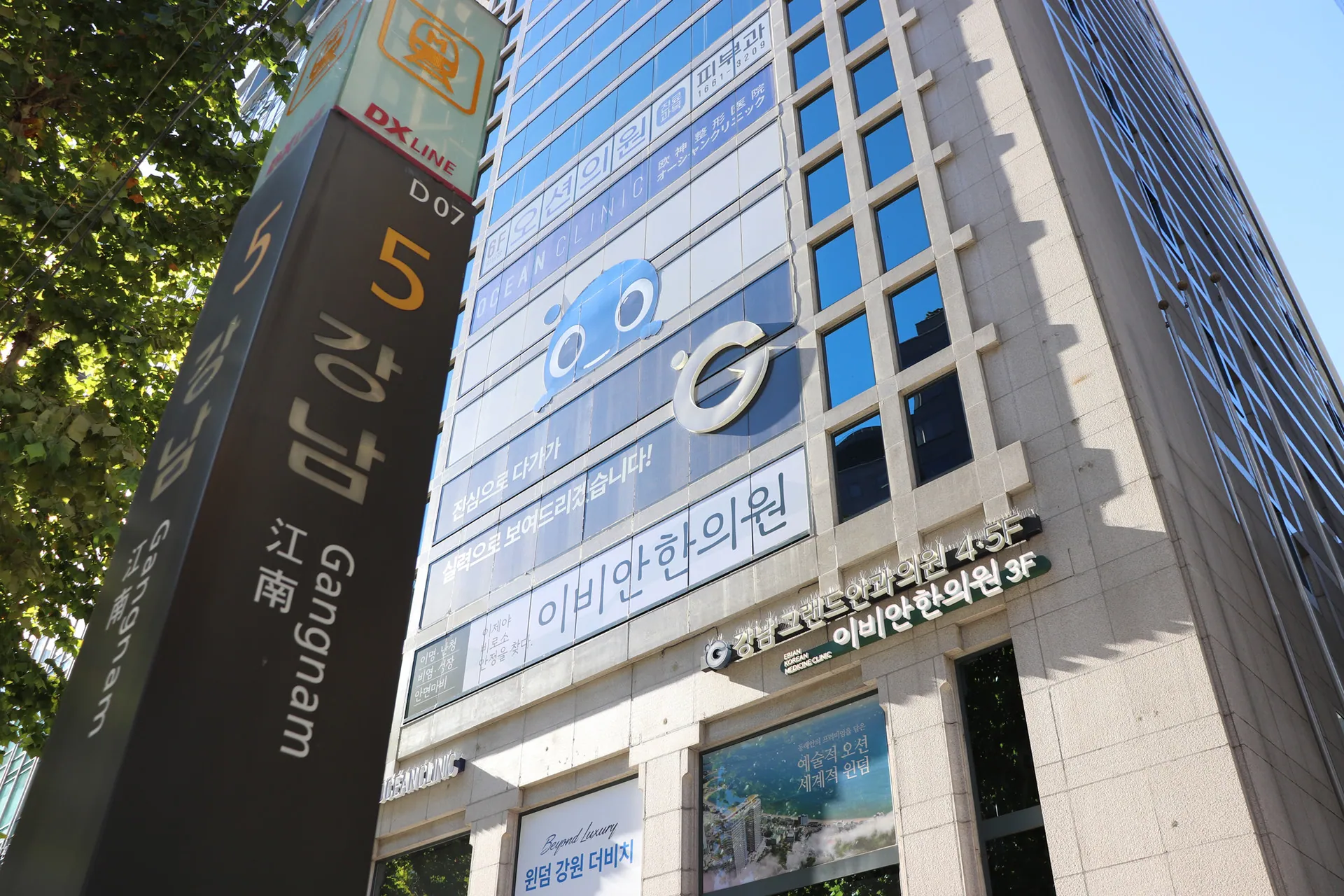
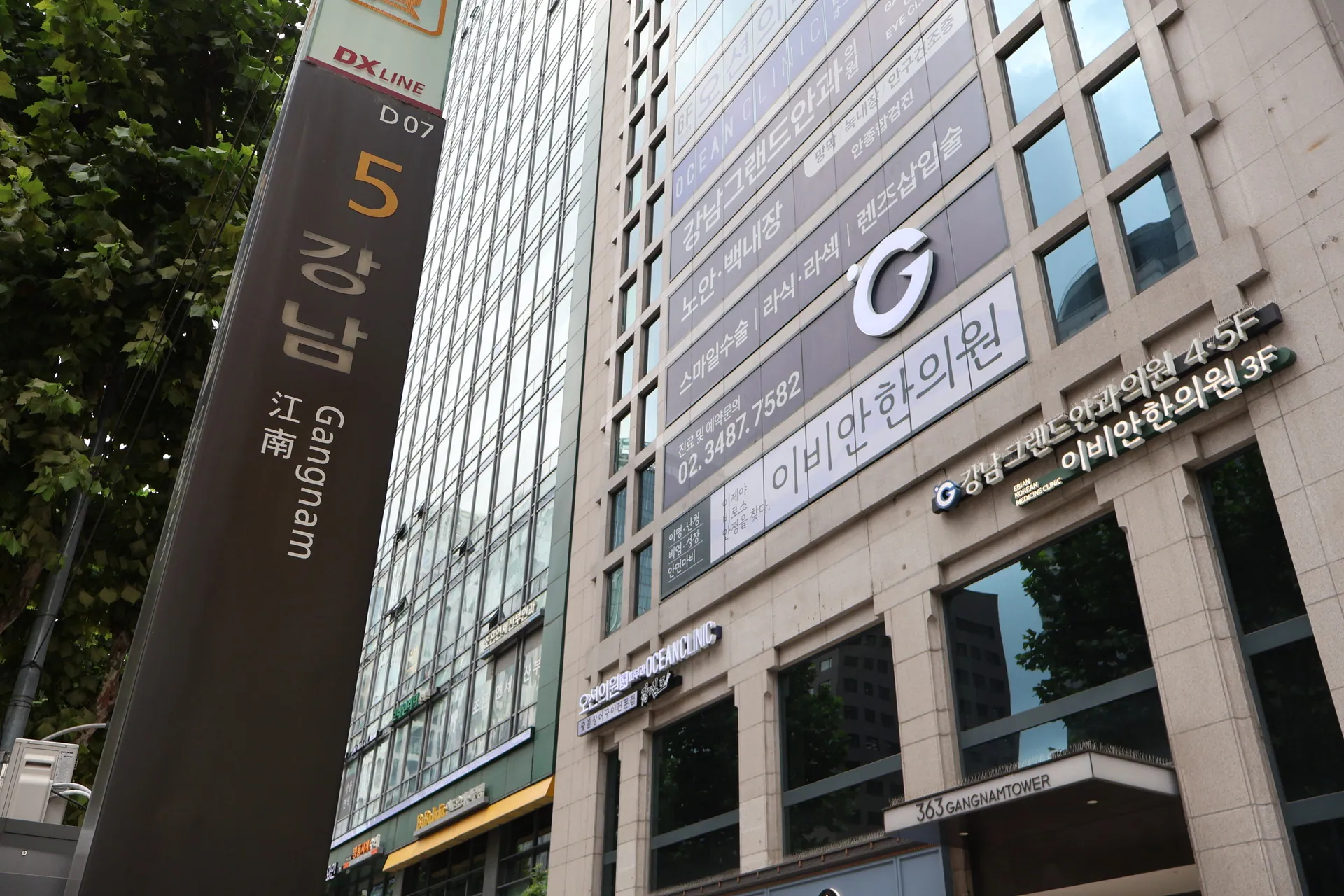
3F, 363 Gangnam-daero, Seocho-gu, Seoul (Seocho-dong)

(Gangnam Station, Exit 5)

Representative: Yeeun Min | Business name: Ebian Korean Medicine Clinic | Business registration no.: 448-92-00624

Main line: +82-2-523-8080 | Fax: +82-2-2651-8089 | Email: purun1888@naver.com

Hours (Korea Standard Time, KST)
Weekdays9:00~21:00
Sat · Sun · Public Holidays09:00~16:00
Lunch Break12:30~14:00
Weekend & Holiday Lunch Break12:00~13:00

3F, 363 Gangnam-daero, Seocho-gu, Seoul (Seocho-dong) (Gangnam Station, Exit 5)

Representative: Yeeun Min | Business name: Ebian Korean Medicine Clinic | Business registration no.: 448-92-00624

Main line: +82-2-523-8080 | Fax: +82-2-2651-8089 | Email: purun1888@naver.com Copyright ⓒ Ebian Korean Medicine Clinic All rights reserved.