Hearing Loss

Step-by-step care for sudden hearing loss

What is hearing loss?

Hearing loss is a condition in which a breakdown in the hearing cells and auditory nerve pathways makes it hard to hear.

Hearing can be lost through exposure to loud noise, fatigue, aging, stress, and other factors, and it is often accompanied by tinnitus.

Sudden hearing loss is a rapid drop in hearing that occurs suddenly without a clear cause.

Reduced hearing in one ear is the most common sign. It is often accompanied by tinnitus, a feeling of fullness in the ear, and dizziness.

Hearing Loss

Step-by-step care for sudden hearing loss

If sudden hearing loss has just started,

seek care for hearing loss as soon as possible.

Sudden hearing loss also has an early window for treatment.

Do not miss this window—seek treatment as soon as possible.

Sudden hearing loss is a condition in which a problem in the inner ear or auditory nerve suddenly makes it hard to hear.

It is usually defined as sensorineural hearing loss of 30 dB or more in at least 3 consecutive frequencies on a pure-tone hearing test,

occurring within 3 days.

Hearing may continue to decline, and if treatment is delayed, it may be lost entirely so that you cannot hear any sound.

The outlook tends to be better when intensive treatment begins early; earlier studies report that starting treatment within 1 week of onset is associated with better hearing outcomes.

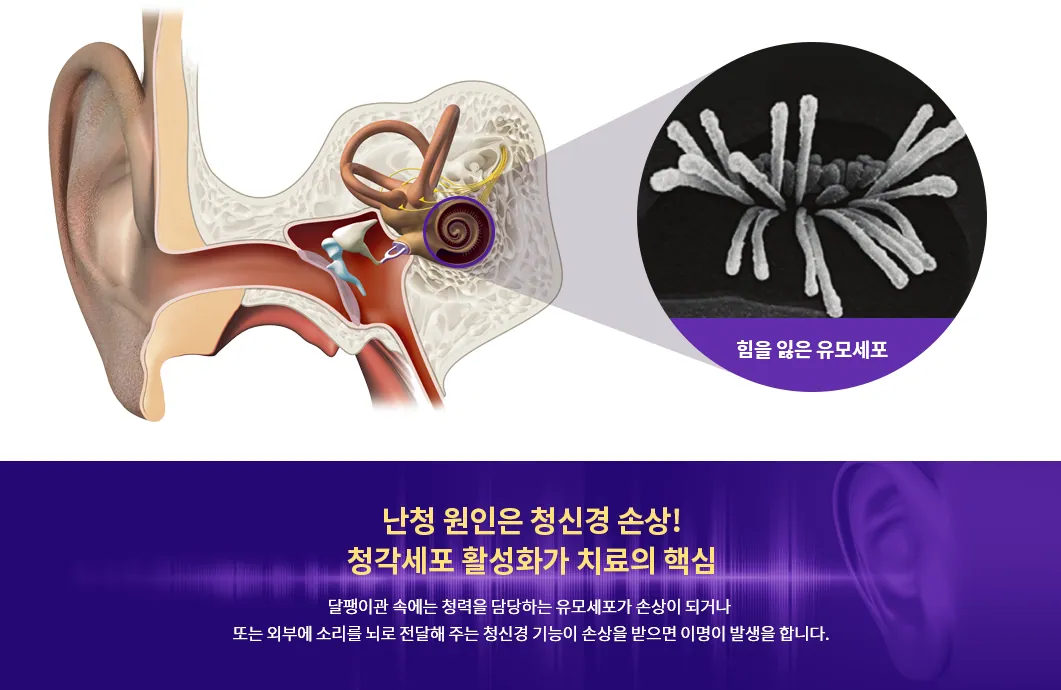
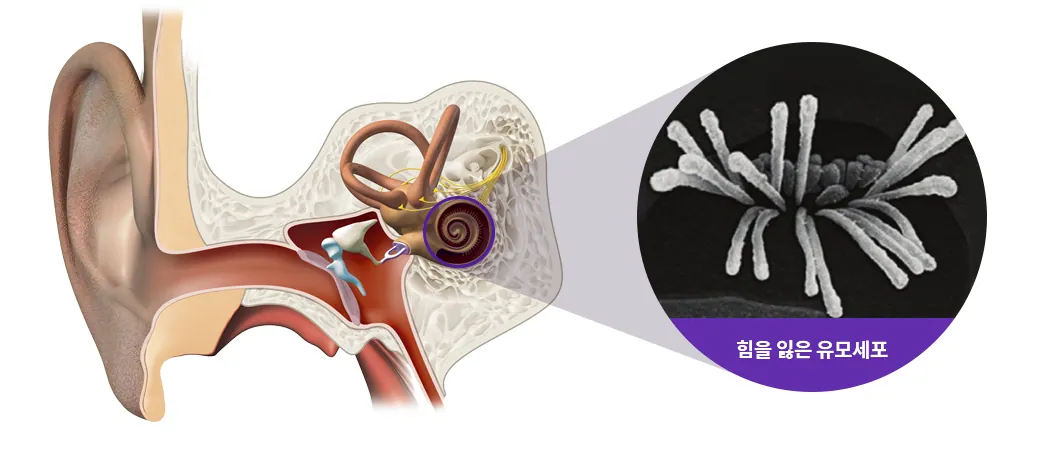
Weakened auditory hair cells

A common cause of hearing loss: auditory nerve damage

Supporting auditory hair cell function is central to care

Hearing loss occurs when the hair cells responsible for hearing in the cochlea are damaged, or when the function of the auditory nerve, which carries sound to the brain, is impaired.

When hearing loss care is needed

Hearing loss that should be

examined

Discomfort from a blocked or full feeling in the ear

Taking steroid injections, oral steroids, circulation medicine or sedatives for sudden hearing loss

Often told the TV is too loud

Difficulty with everyday conversation in noisy places

Recommended a hearing aid but want to protect your own hearing

Find hearing aids uncomfortable and want to hear without them

Causes of hearing loss in Korean Medicine

Korean Medicine holds that hearing loss develops when the balance of the internal organs is lost and the hearing signal system breaks down.

Under severe stress, heat from the liver and heart

rises to the head (heart fire). Because rising heat increases pressure and interferes with blood flow,

poor circulation eventually damages the hearing cells in the cochlea

and causes hearing loss.

Imbalance of the internal organs

Disorder in the auditory signal system

Damage to hearing cells

Hearing loss symptoms

If hearing loss symptoms persist, have your condition checked with tests; the approach to care is decided after consultation based on your condition.


Ebian Korean Medicine Clinic checks your hearing with a hearing test

and provides care with acupuncture, pharmacopuncture, and Korean herbal medicine.

Steroid medication is one treatment option;
because responses differ from person to person,
we explain the options after examining your condition.


Left untreated, hearing loss may progress to a stage that is harder to treat,

so appropriate care at the right time is important.

At Ebian Korean Medicine Clinic, we do not look for the cause of hearing loss

only in the ear;

our care aims to activate the hearing cells and improve overall health.

In this way, we work to create conditions that support hearing and to keep hearing loss from getting worse.

Hearing care at Ebian Korean Medicine Clinic

Creating an environment to help revitalize auditory cells
Treatment focused on preventing hearing loss from worsening further

Helping restore the damaged auditory signal system

Our tinnitus and hearing loss care

We work to support the auditory system, which detects external sounds and relays auditory signals to the brain.

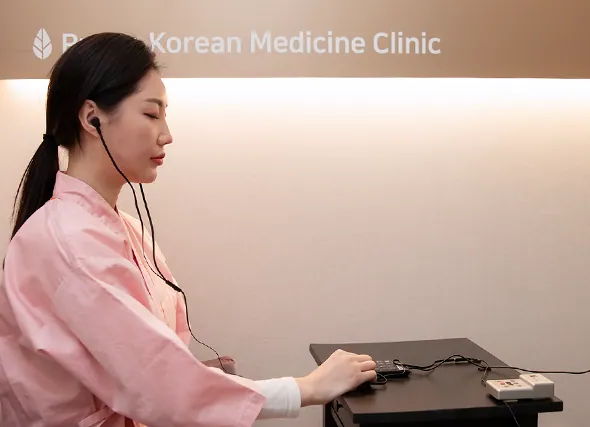
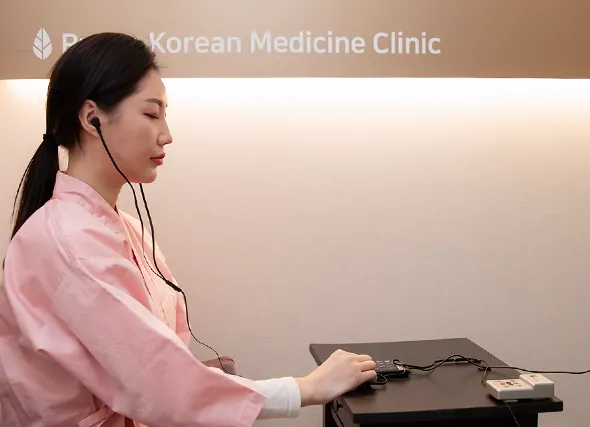
By presenting specific sound stimuli to less active auditory hair cells, we aim to support their electromotility and viscoelastic properties and thereby help improve hearing.

Supporting hearing-cell activity

Hwalcheong-tang

Supporting weakened hair cells

Sound-based auditory rehabilitation

Supporting auditory nerve signal transmission

Hwalcheong external therapy
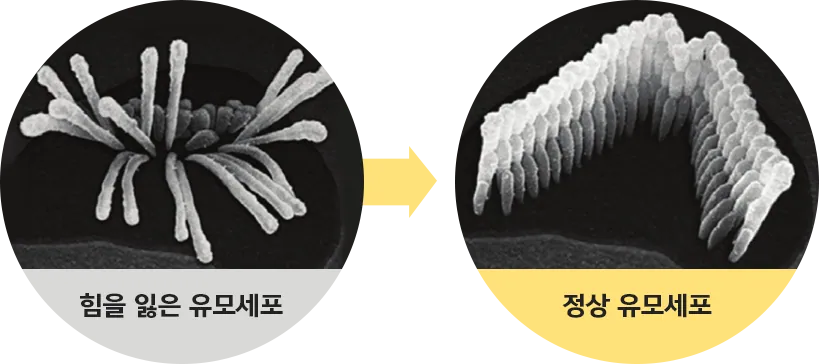

How sound-based auditory rehabilitation works

Auditory hair-cell activity plays an important role in hearing.

Auditory hair cell that has lost strength
Normal auditory hair cell
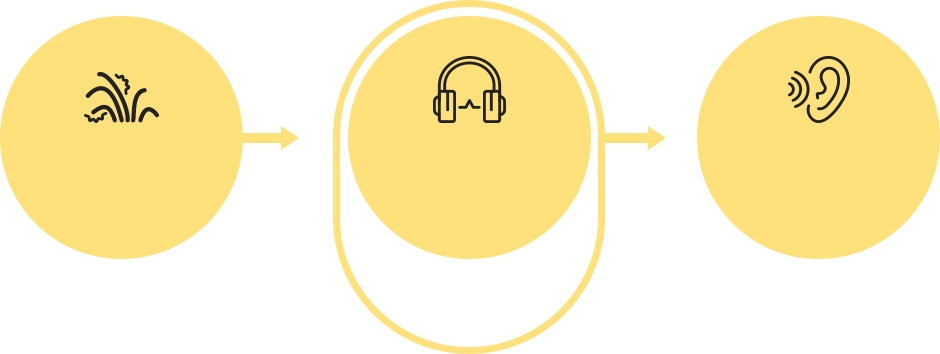
When sound is detected, the auditory hair cells move and transmit auditory signals to the brain.

Supporting the electromotility and viscoelastic properties of less active auditory hair cells may help improve the transmission of auditory signals.

Damaged auditory
hair cells

Increased electromotility
and viscoelasticity

Supporting auditory
nerve transmission

Sound-based auditory rehabilitation

Hearing loss that should be examined

If hearing loss symptoms persist, have your condition checked with tests; the approach to care is decided after consultation based on your condition.

Ebian Korean Medicine Clinic looks at both your ears and your overall condition with hearing tests, pulse diagnosis, and thermography, and provides care for hearing loss with acupuncture, pharmacopuncture, and Korean herbal medicine.

Steroid medication is one treatment option; because responses differ from person to person, we explain the options after examining your condition.


Left untreated, hearing loss may progress to a stage that is harder to treat, so appropriate care at the right time is important.

At Ebian Korean Medicine Clinic, we do not look for the cause of hearing loss only in the ear; our care aims to activate the hearing cells and improve overall health.

In this way, we work to create conditions that support hearing and to keep hearing loss from getting worse.

Hearing care at Ebian Korean Medicine Clinic

Creating an environment to help revitalize auditory cells
Treatment focused on preventing hearing loss from worsening further

Helping restore the damaged auditory signal system

Our tinnitus and hearing loss care

We work to support the auditory system, which detects external sounds and relays auditory signals to the brain.

By presenting specific sound stimuli to less active auditory hair cells, we aim to support their electromotility and viscoelastic properties and thereby help improve hearing.

Supporting hearing-cell activity

Hwalcheong-tang

Supporting weakened hair cells

Sound-based auditory rehabilitation

Supporting auditory nerve signal transmission

Hwalcheong external therapy
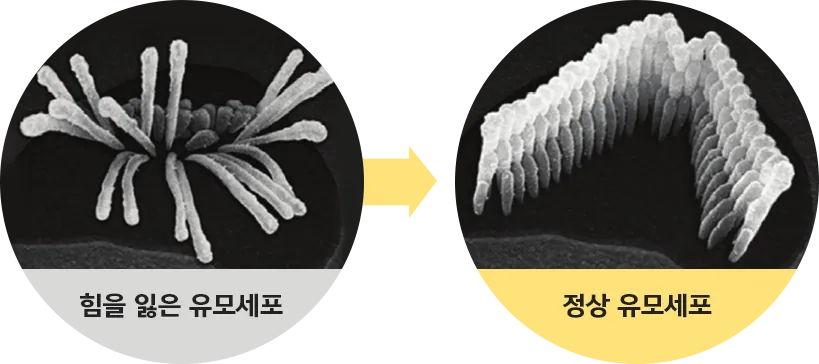

How sound-based auditory rehabilitation works

Auditory hair-cell activity plays an important role in hearing.

Auditory hair cell that has lost strength
Normal auditory hair cell

When sound is detected, the auditory hair cells move and transmit auditory signals to the brain.

Supporting the electromotility and viscoelastic properties of less active auditory hair cells may help improve the transmission of auditory signals.

Damaged auditory
hair cells

Increased electromotility
and viscoelasticity

Supporting auditory
nerve transmission

Sound-based auditory rehabilitation
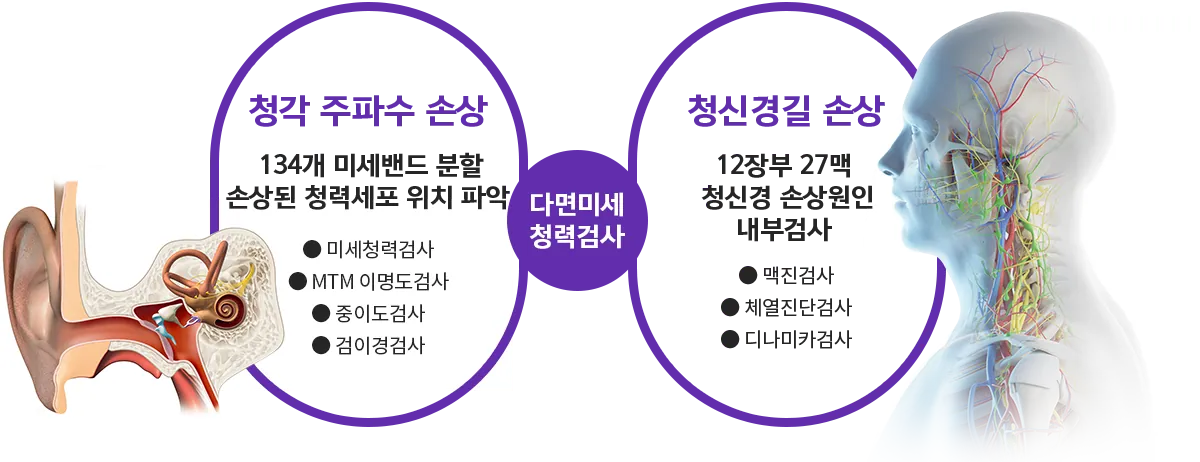
High-resolution multidimensional hearing test

Multidimensional Detailed Hearing Test

Auditory Frequency Damage

Divided into 134 detailed frequency bands
Locating damaged auditory hair cells

  • Detailed hearing test
  • MTM tinnitus test
  • Tympanometry
  • Otoscopic exam

Auditory Nerve Pathway Damage

12 internal organs and 27 pulse types
Internal evaluation for causes of auditory nerve damage
  • Pulse diagnosis exam
  • Thermal imaging diagnosis
  • Dinamika test
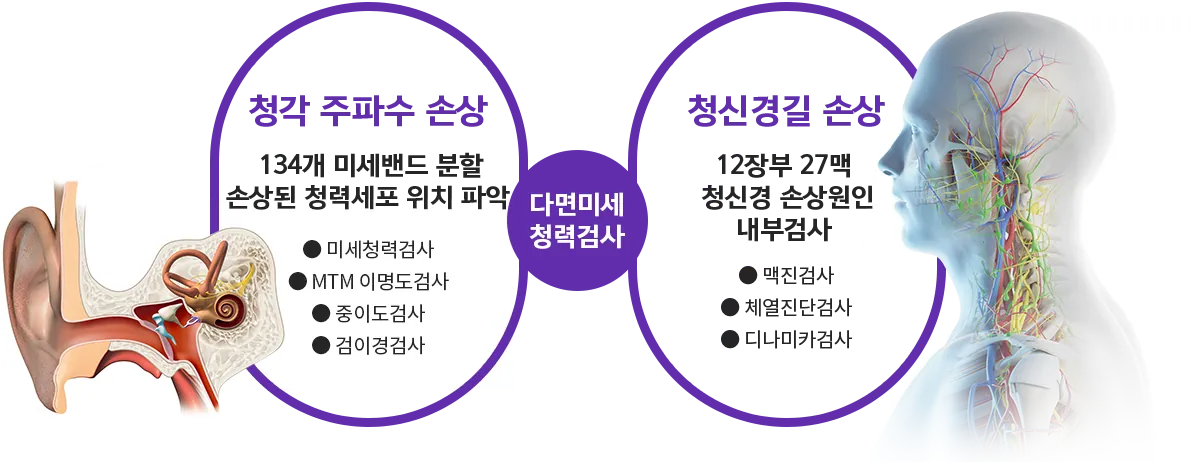
High-resolution multidimensional hearing test

Multidimensional Detailed Hearing Test

Auditory Frequency Damage

Divided into 134 detailed frequency bands
Locating damaged auditory hair cells

  • Detailed hearing test
  • MTM tinnitus test
  • Tympanometry
  • Otoscopic exam

Auditory Nerve Pathway Damage

12 internal organs and 27 pulse types
Internal evaluation for causes of auditory nerve damage

  • Pulse diagnosis exam
  • Thermal imaging diagnosis
  • Dinamika test
Step-by-step detailed hearing tests

Proper care starts with finding the cause.

Step-by-step detailed hearing tests

Proper care starts with finding the cause.

[Step 1] Identifying damaged hearing frequencies

Detailed hearing test
(AMA-PTA)

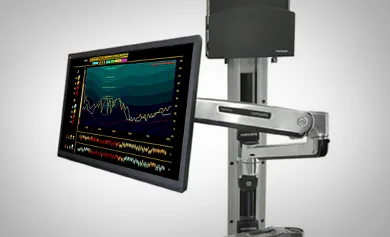
Finds the frequency bands of hearing loss with pure-tone audiometry of up to 134 bands

MTM tinnitus test

Identifies tinnitus and masking points with a threshold signal controller (MTM)

[Step 2] Examining internal factors behind auditory nerve pathway damage

Pulse diagnosis

Identifies the cause of auditory nerve pathway damage through the flow of qi and blood in the internal organs

Thermal imaging test

Checks blood circulation around the ears and reduced body function through body heat patterns
Our care is planned around your hearing condition

How Ebian Korean Medicine Clinic approaches tinnitus and hearing loss

First, in tinnitus and hearing loss testing,

we look at your hearing step by step.

We check hearing by frequency with a detailed hearing test,

and assess your condition with infrared thermography and pulse diagnosis.

We look at the degree of hearing cell damage and at imbalances in the internal organs to find the cause of auditory nerve damage.

Through hearing tests, we look into the causes of tinnitus and hearing loss,

and plan care carefully based on the test results.

Second,

we have presented 5 case reports on tinnitus and hearing loss to academic societies.

Ebian Korean Medicine Clinic is staffed by Doctors of Korean Medicine and has presented case reports on tinnitus and hearing loss to academic societies.

◈ Case reports on tinnitus and hearing loss presented to academic societies ◈


[ Ebian Korean Medicine Clinic Papers ]

Care for pulsatile tinnitus:

acupuncture centered on acupotomy


Combined Korean Medicine treatment and sound-based auditory rehabilitation

Bilateral sudden hearing loss


Combined Korean Medicine treatment and sound-based auditory rehabilitation

Age-related hearing loss


Combined Korean Medicine treatment and sound-based auditory rehabilitation

Delayed sudden hearing loss


Korean Medicine treatment of

patulous Eustachian tube dysfunction accompanied by indigestion

Share of each treatment

External therapy

Hwalcheong-tang

Sound-based auditory rehabilitation

Third, we combine several approaches rather than relying on a single method.

Tinnitus and hearing loss can be difficult to improve with a single treatment alone, so we use an integrated approach.

Ebian Korean Medicine Clinic looks at your hearing and prescribes Hwalcheong-tang (an herbal decoction),

and combines sound-based auditory rehabilitation with external therapies.

[ Ebian Korean Medicine Clinic, visited by patients from across Korea ]

Visit support for patients traveling from afar

Weekday evenings and Sundays, all year

Ebian Korean Medicine Clinic

Weekday evening
hours year-round

Sunday priority
booking for patients
from afar

Pre-visit call
to shorten
waiting time

※ When booking, please tell us you are a 'long-distance patient'.
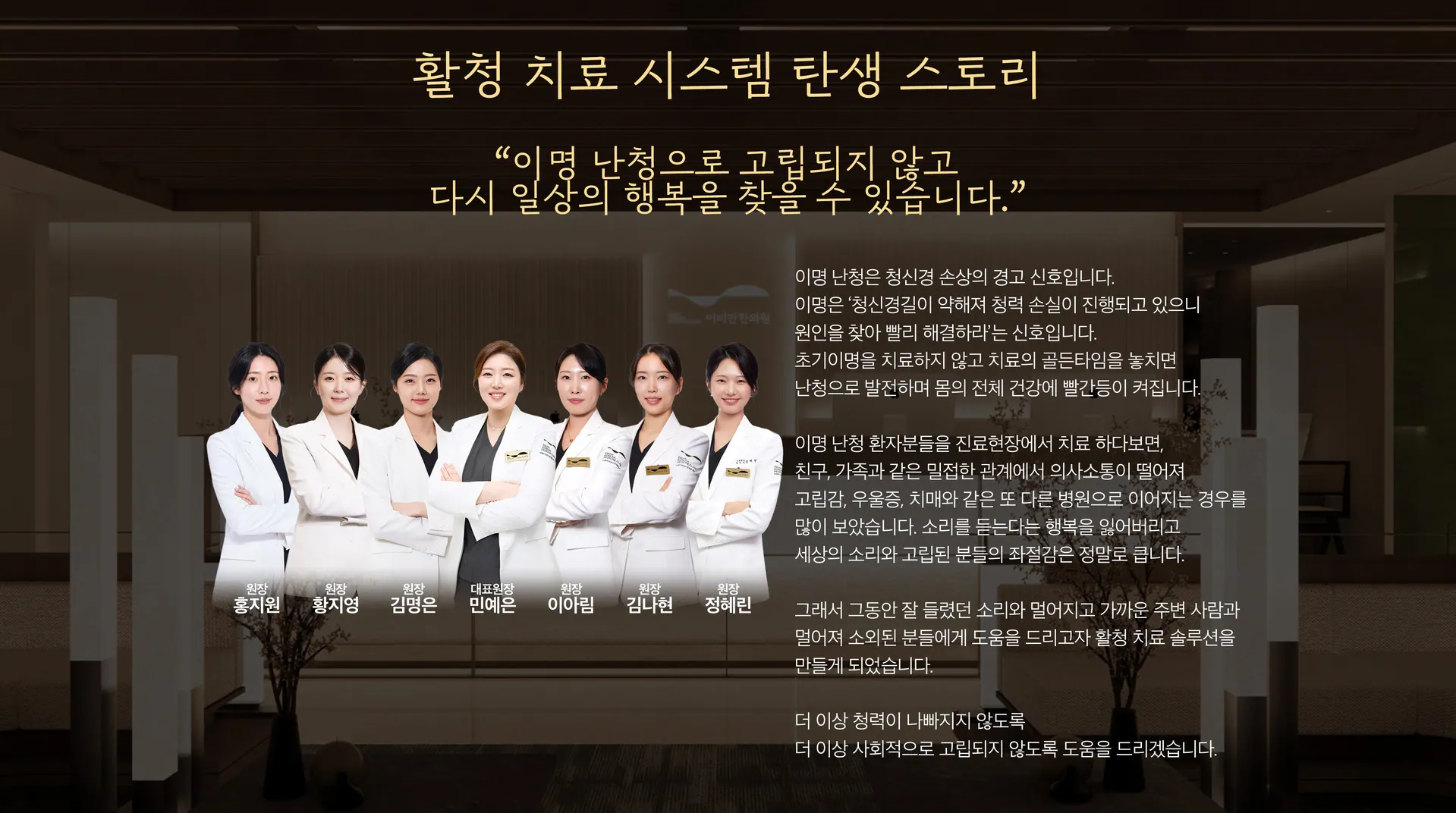
How our tinnitus and hearing loss care began

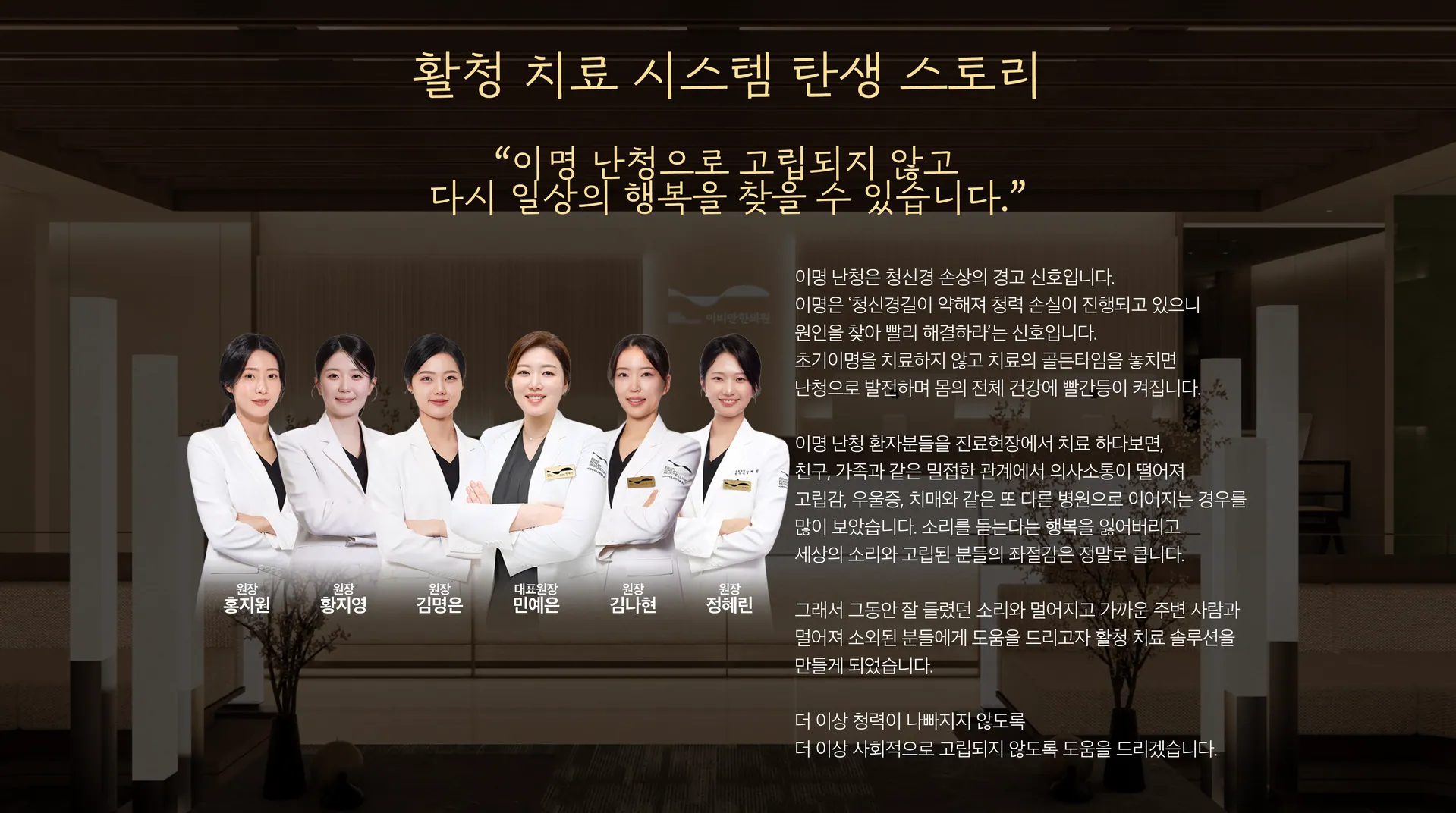
"Tinnitus and hearing loss do not have to leave you isolated."

Tinnitus and hearing loss are warning signs of auditory nerve damage.


Tinnitus is a signal that says, "The auditory nerve pathway is weakening and hearing loss is progressing,

so find the cause and address it quickly."

If early tinnitus is left untreated

and the critical early window for treatment is missed, it can lead to hearing loss

and become a red flag for your overall health.


In caring for patients with tinnitus and hearing loss,

we have often seen communication break down

in close relationships with friends and family,

which can result in other problems such as isolation, depression, and dementia.

Losing the everyday joy of hearing

and feeling cut off from the sounds of the world

is deeply frustrating.


That is why we developed our tinnitus and hearing loss care—to help people who have grown distant from the sounds they once heard clearly and from the people around them.


We will help you keep your hearing from getting worse and keep you from becoming socially isolated.


Hours (Korea Standard Time, KST)
Weekdays09:00~21:00
Sat · Sun · Public Holidays09:00~16:00
Lunch Break12:30~14:00
Weekend & Holiday Lunch Break12:00~13:00

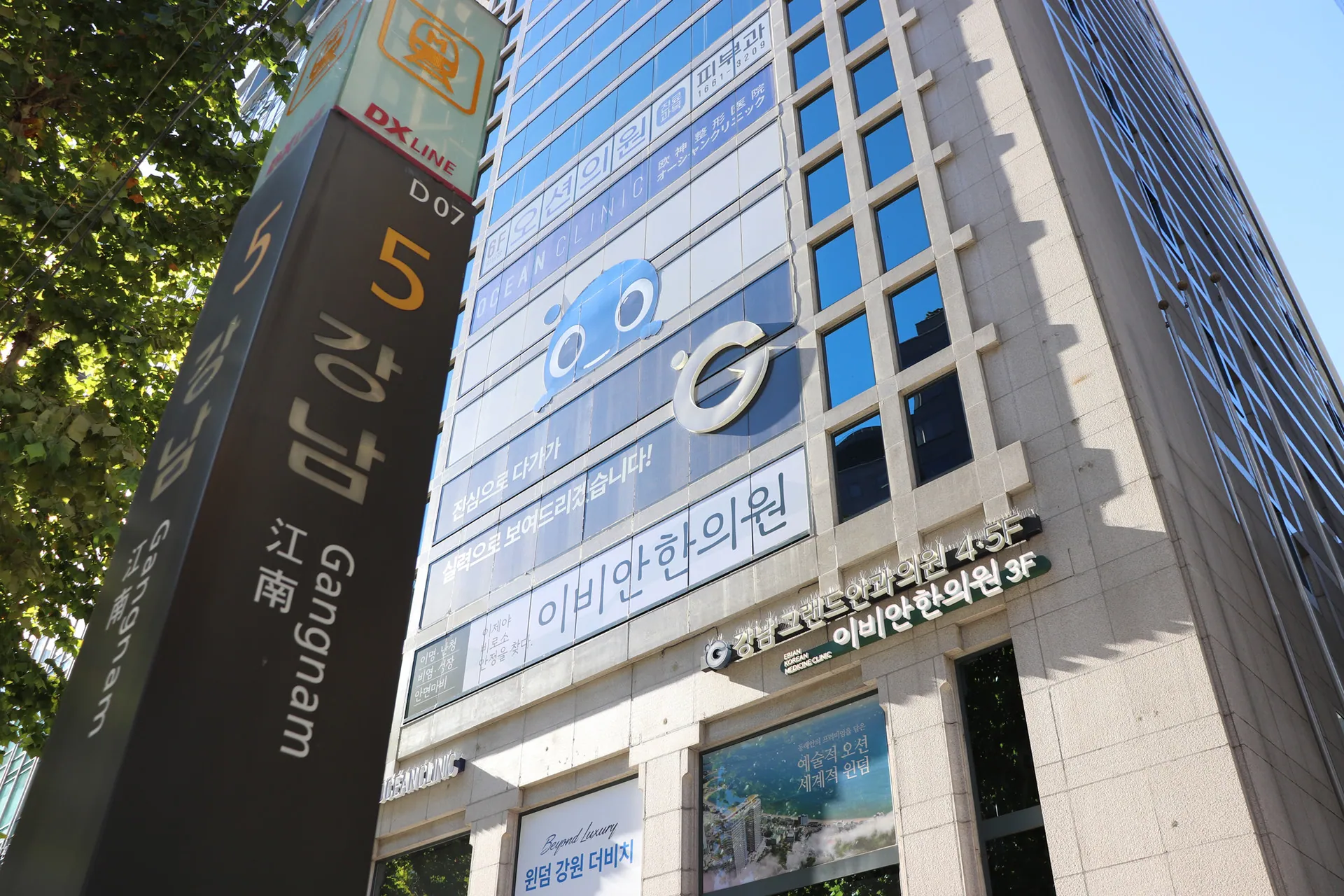
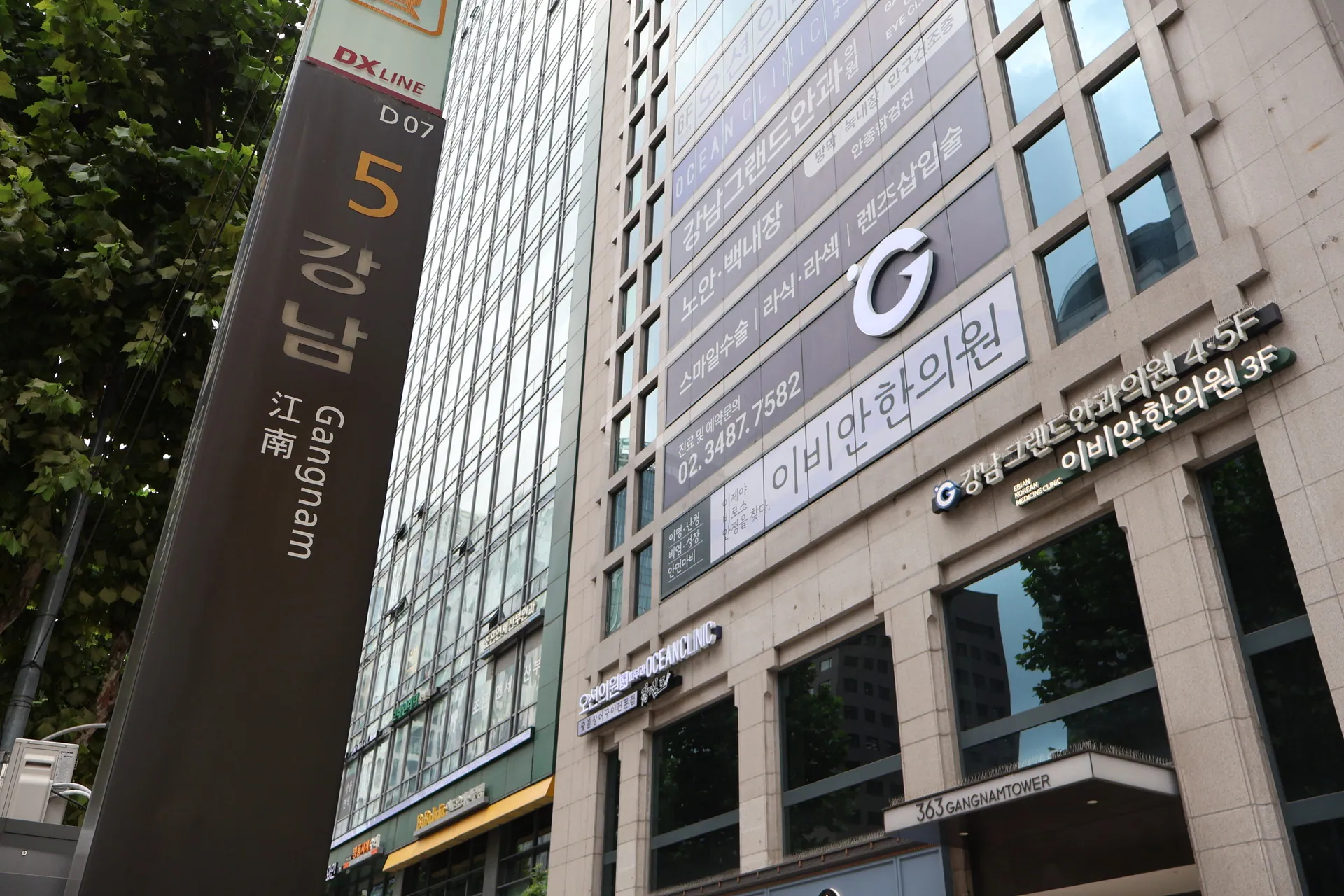
3F, 363 Gangnam-daero, Seocho-gu, Seoul (Seocho-dong)

(Gangnam Station, Exit 5)

Representative: Yeeun Min | Business name: Ebian Korean Medicine Clinic | Business registration no.: 448-92-00624

Main line: +82-2-523-8080 | Fax: +82-2-2651-8089 | Email: purun1888@naver.com

Hours (Korea Standard Time, KST)
Weekdays9:00~21:00
Sat · Sun · Public Holidays09:00~16:00
Lunch Break12:30~14:00
Weekend & Holiday Lunch Break12:00~13:00

3F, 363 Gangnam-daero, Seocho-gu, Seoul (Seocho-dong) (Gangnam Station, Exit 5)

Representative: Yeeun Min | Business name: Ebian Korean Medicine Clinic | Business registration no.: 448-92-00624

Main line: +82-2-523-8080 | Fax: +82-2-2651-8089 | Email: purun1888@naver.com Copyright ⓒ Ebian Korean Medicine Clinic All rights reserved.